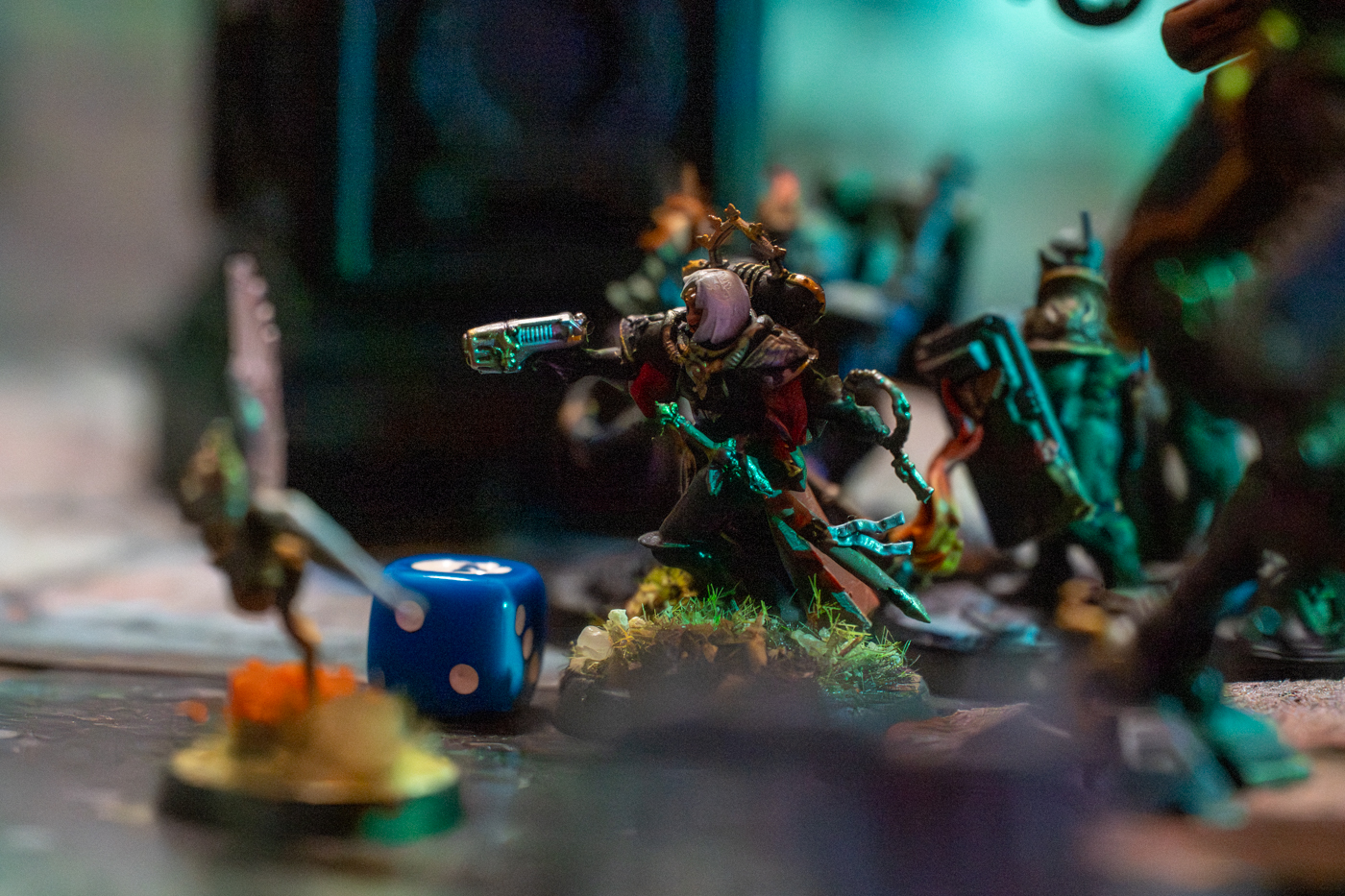
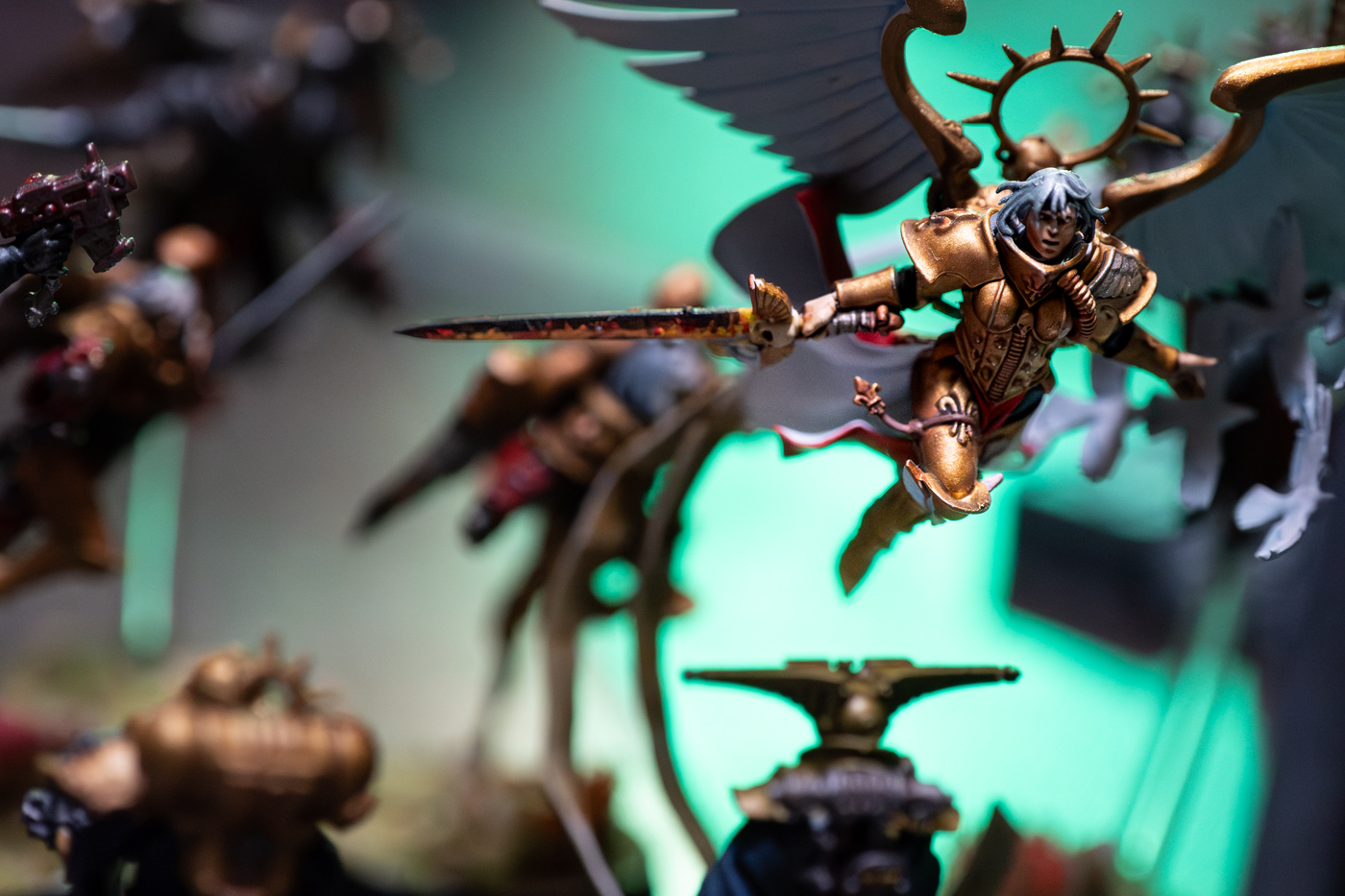
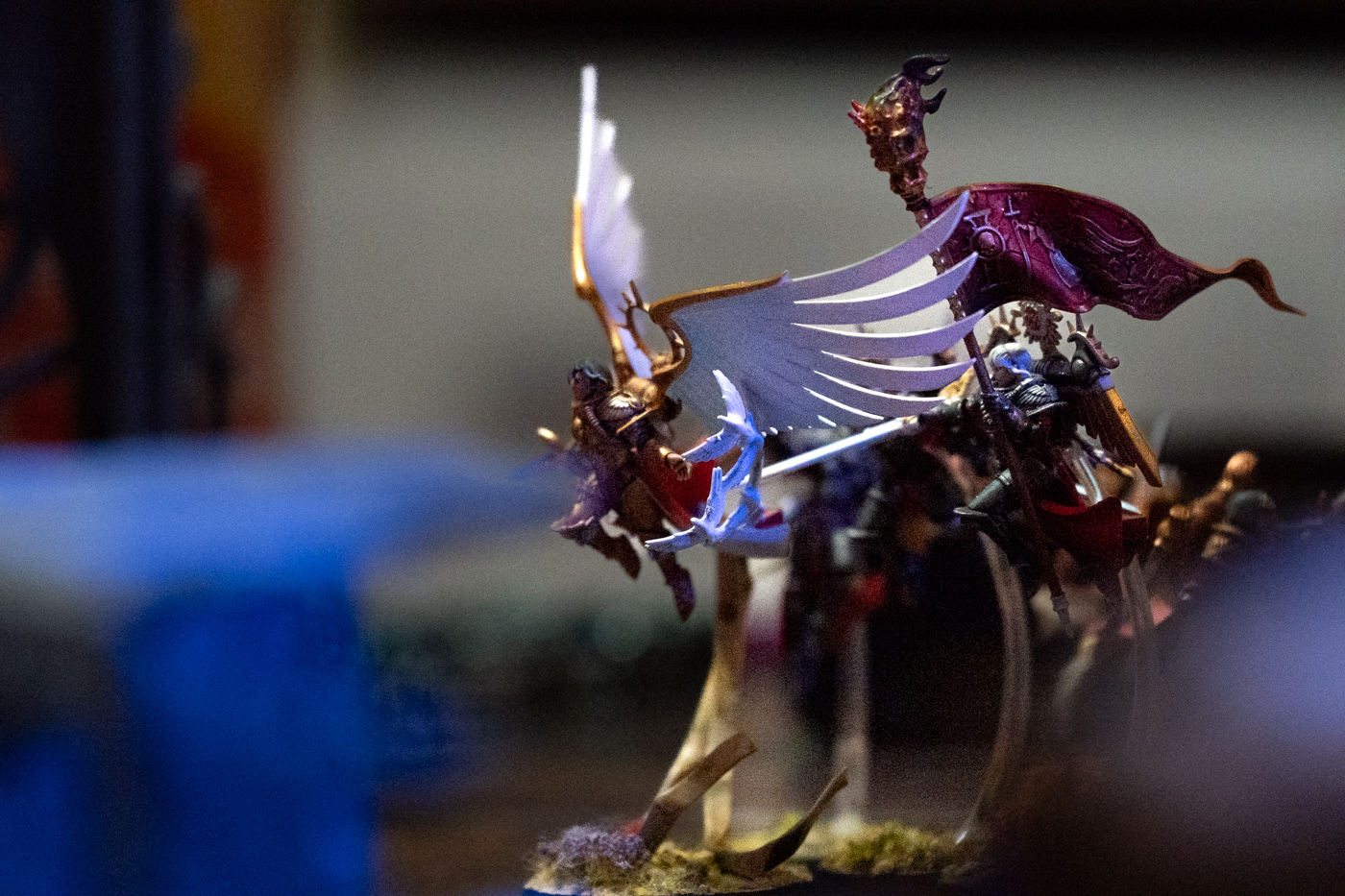
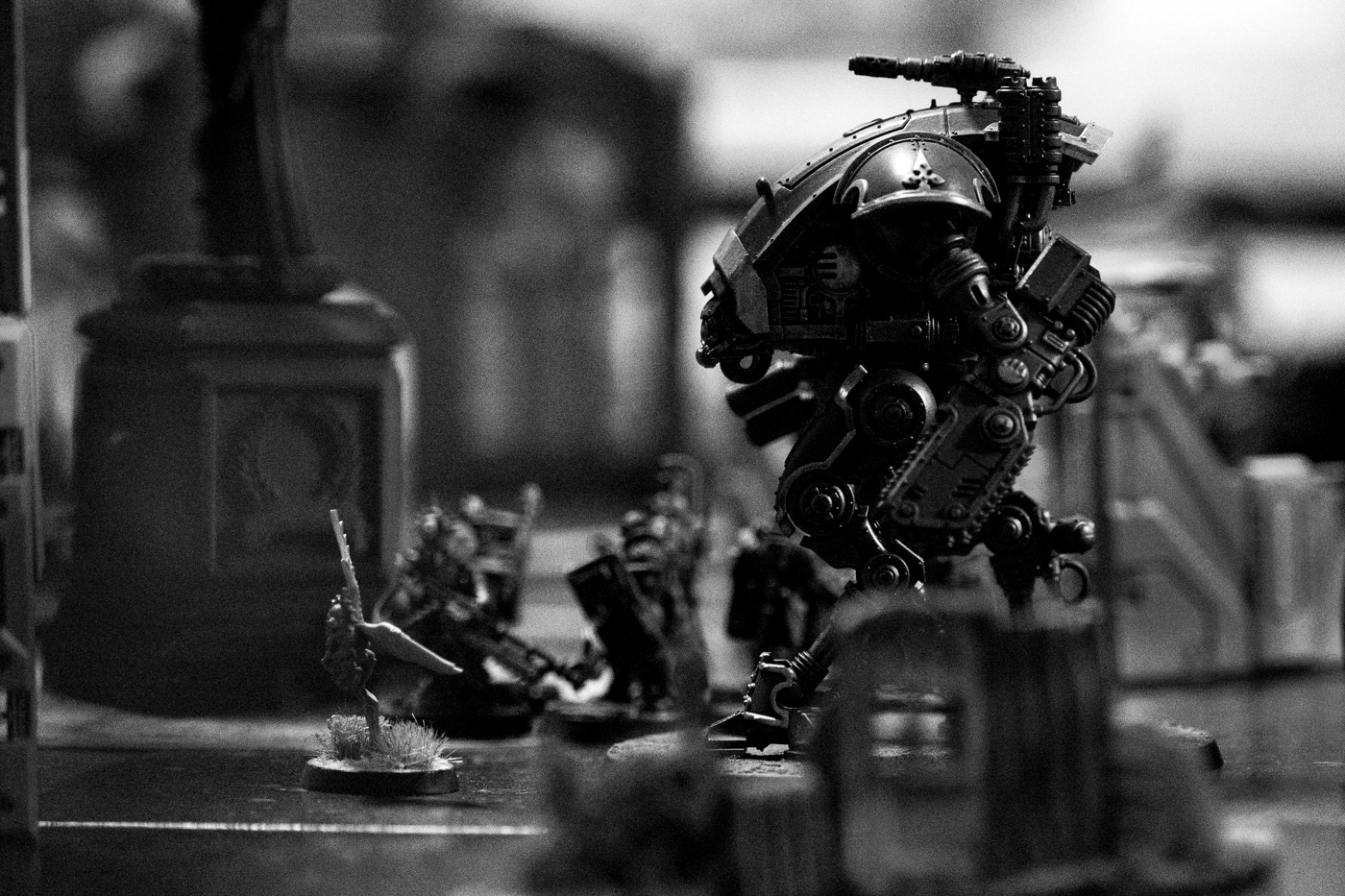
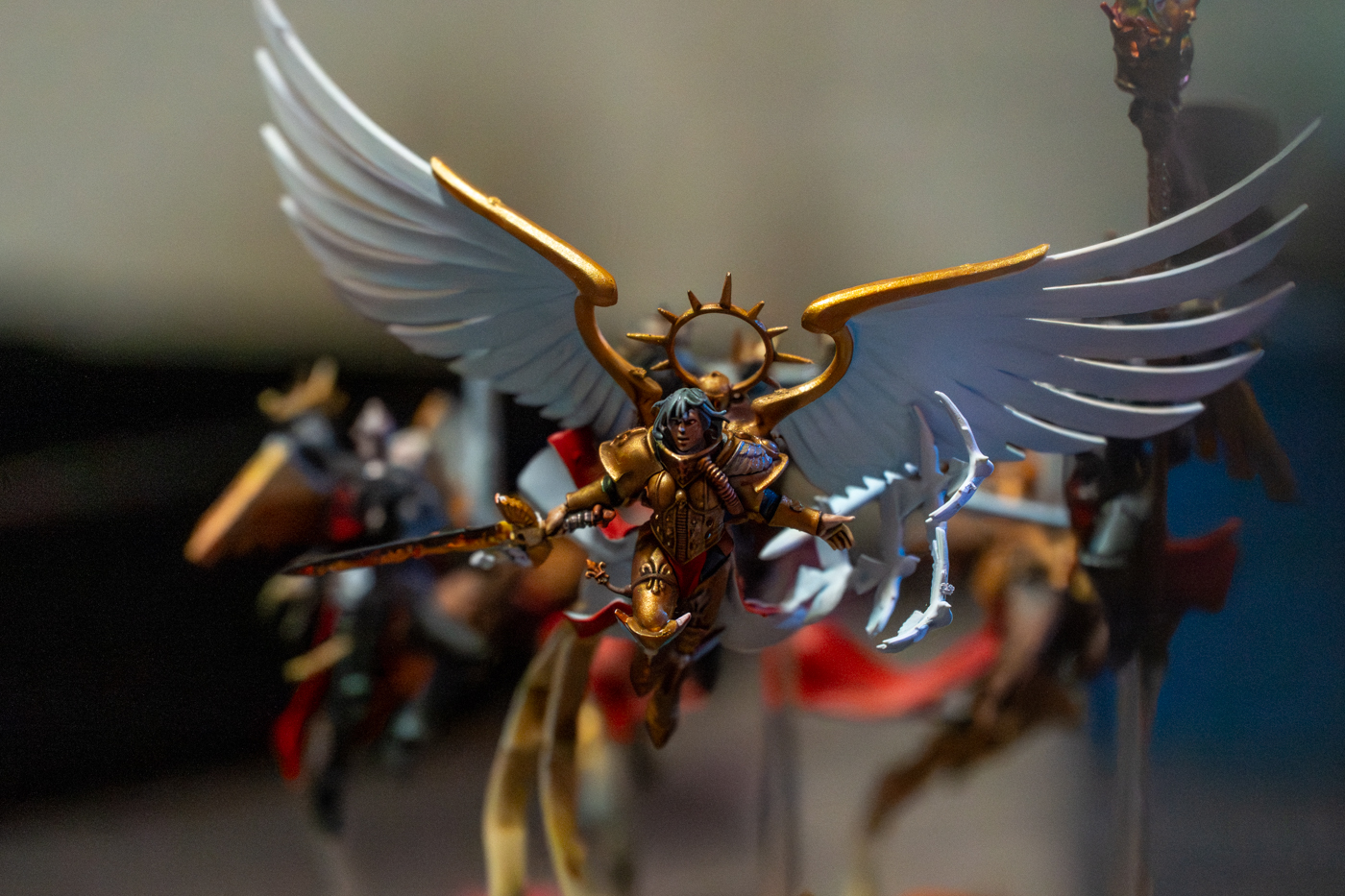
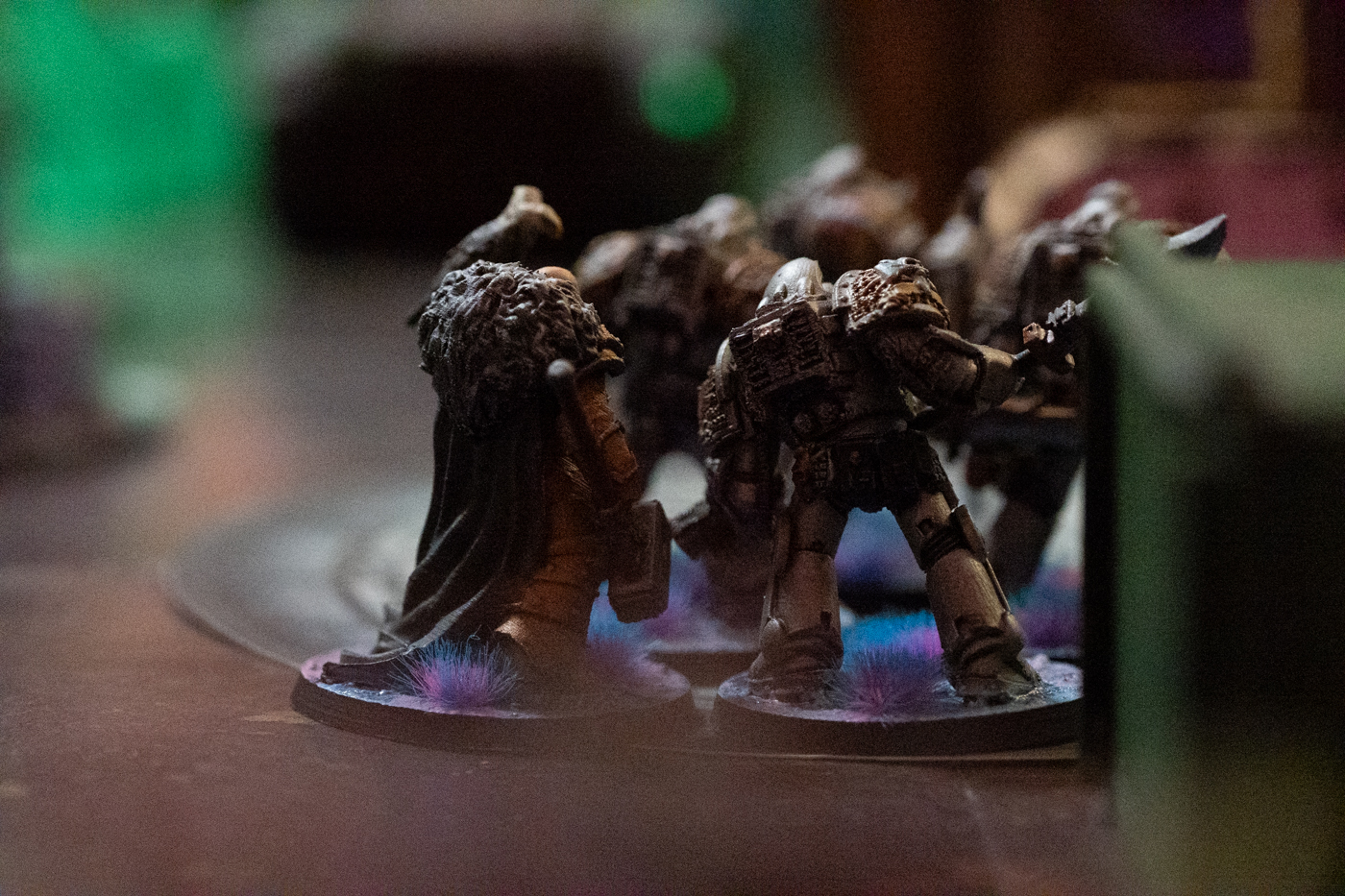
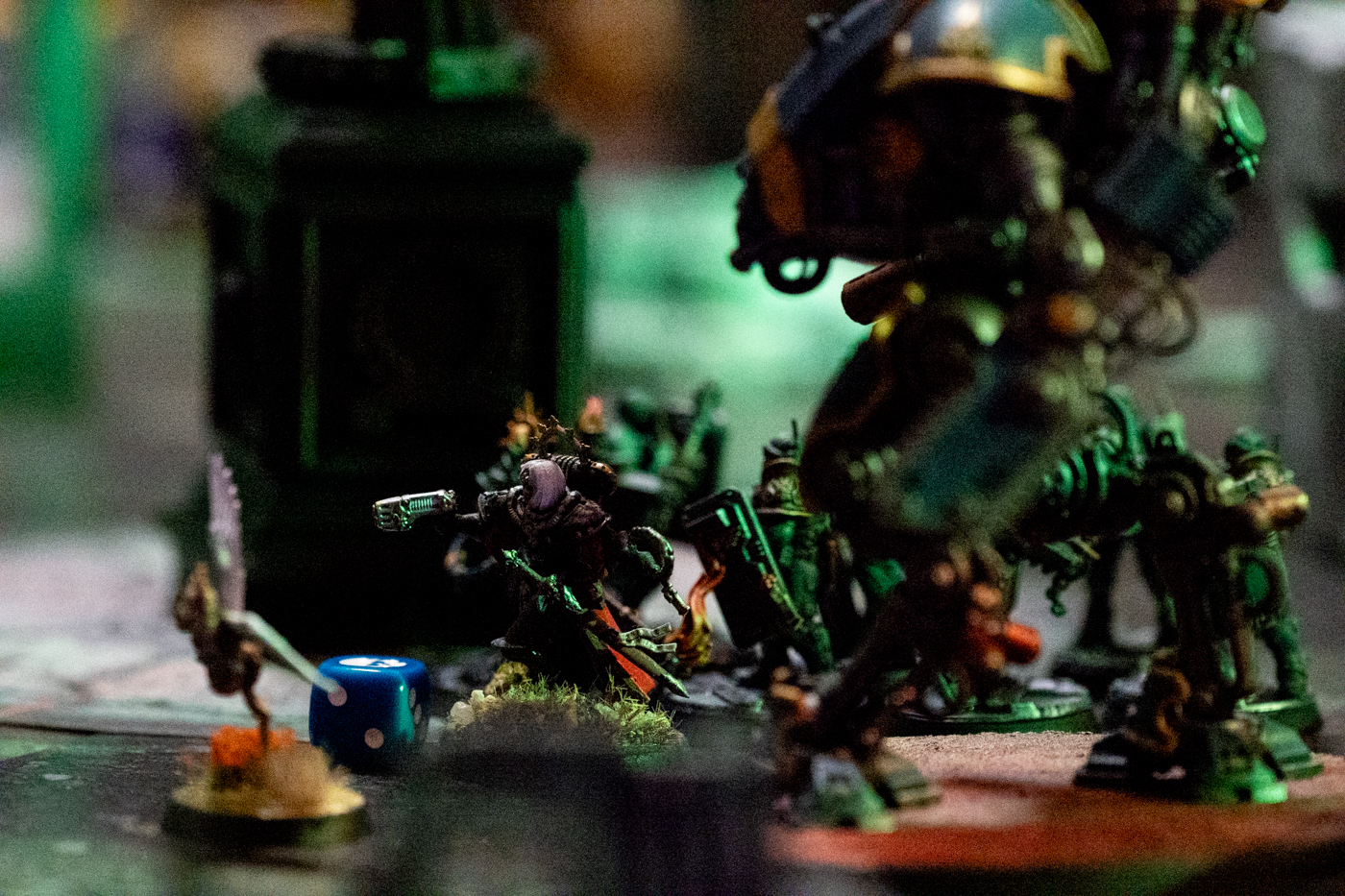
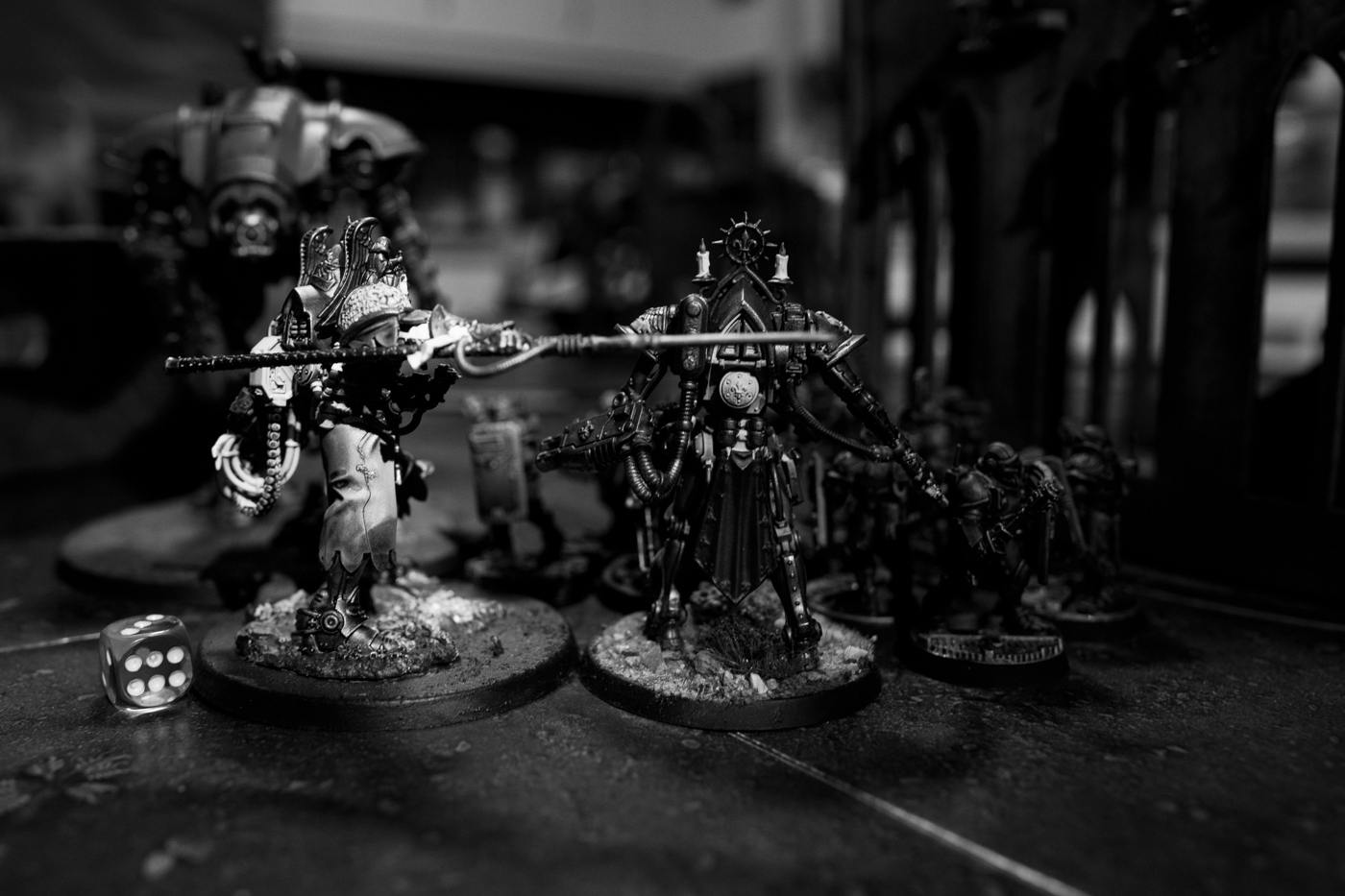
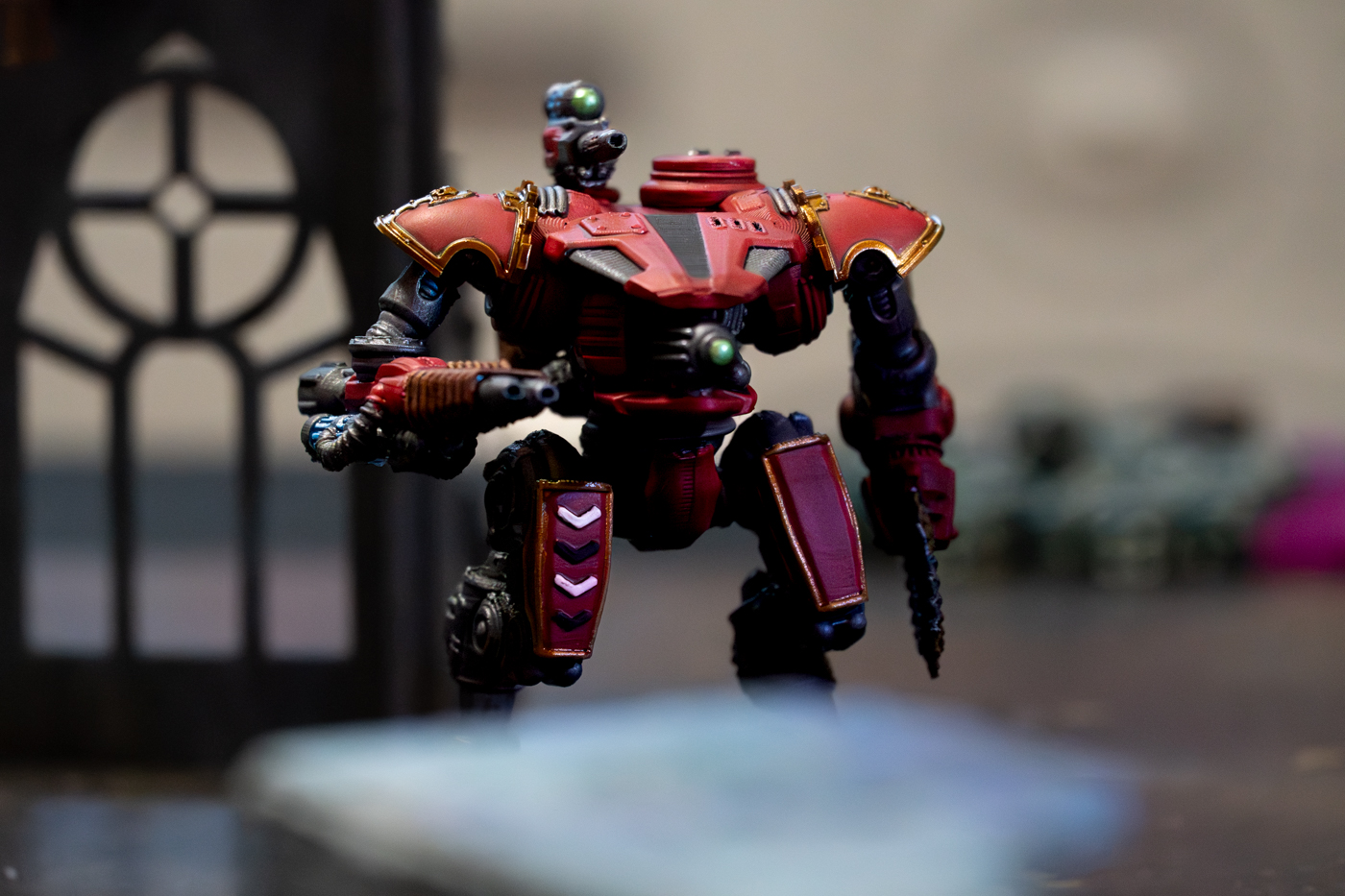
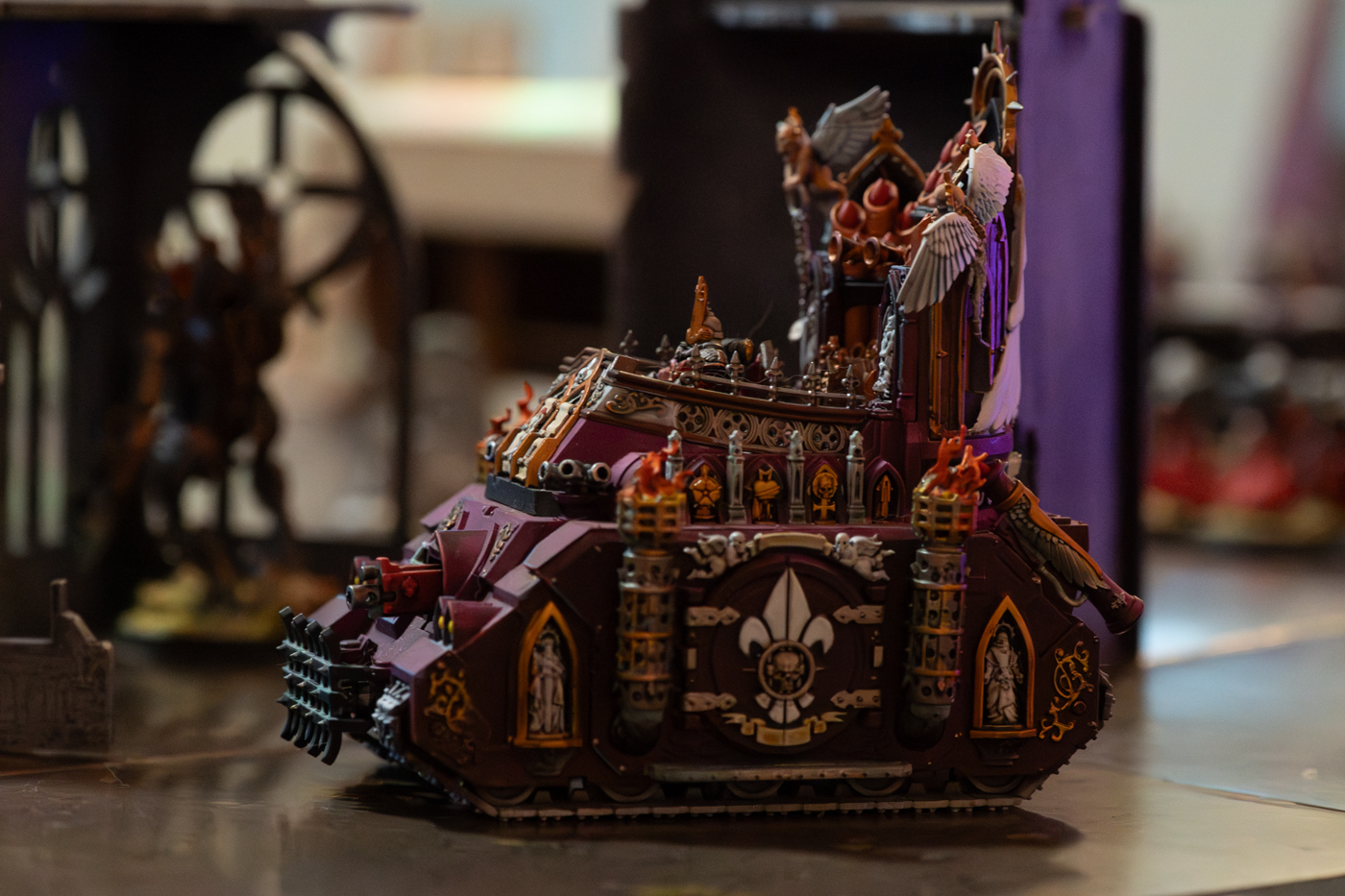
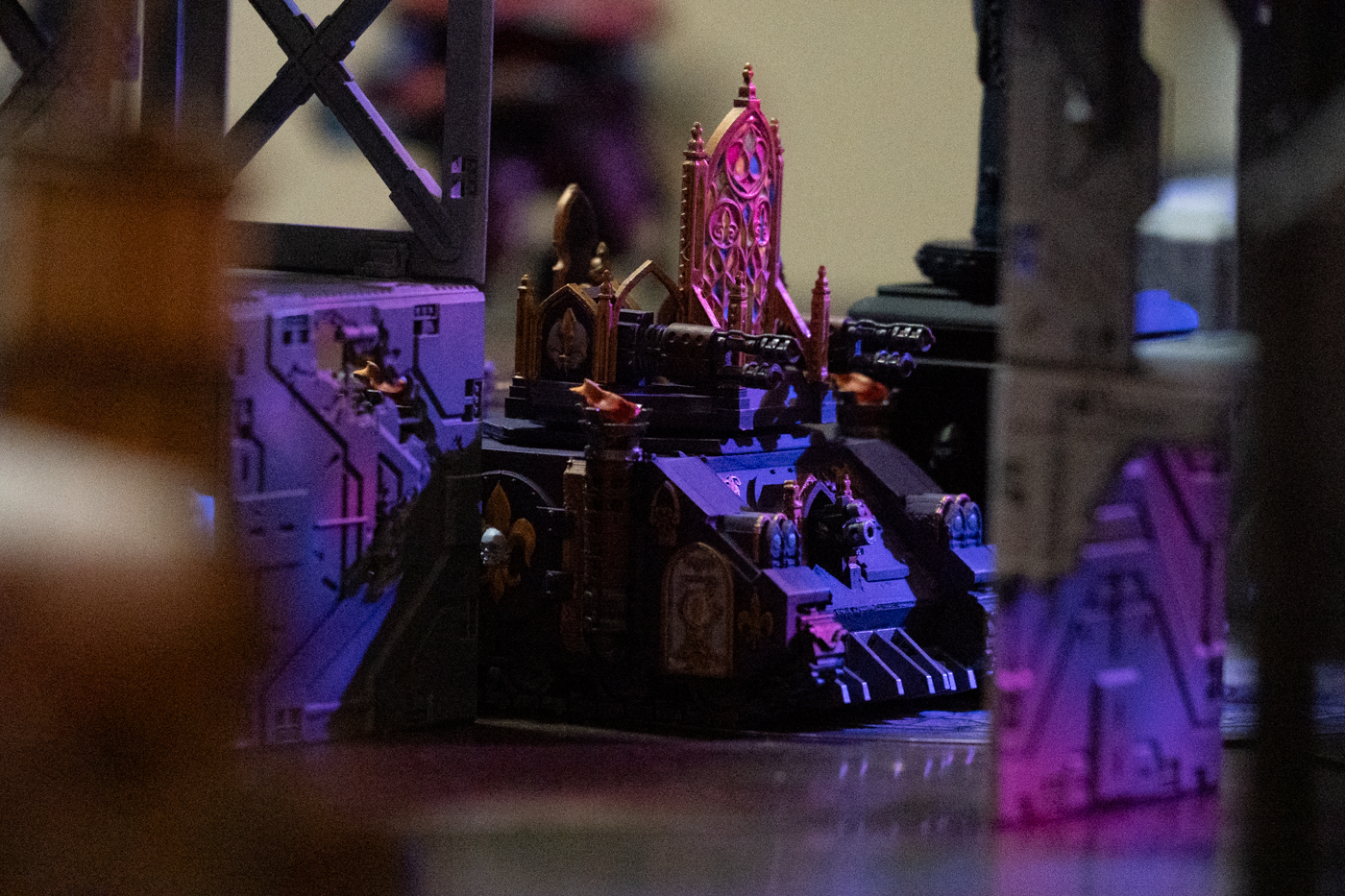
I love Warhammer, it’s so over the top. I enjoy painting the models, working on armies and lists, and occasionally I enjoy playing the game. I was going to post about last Saturday’s Warhammer game, but I was curb stomped by Grumble.
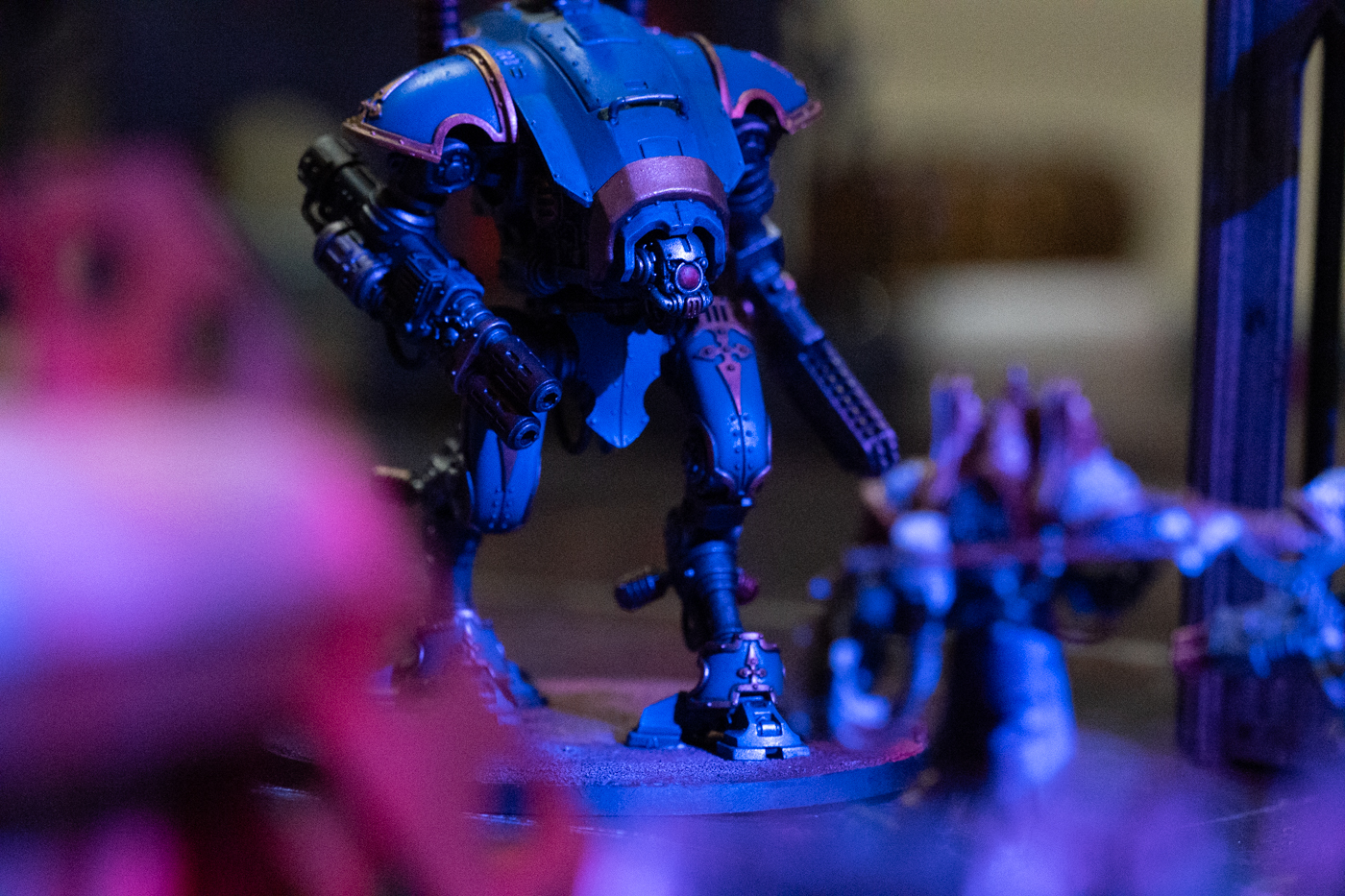
Who brings three knights to a friendly game of beer dice? It was over by round 3 but I wanted to see what I could win points-wise; turns out not much.
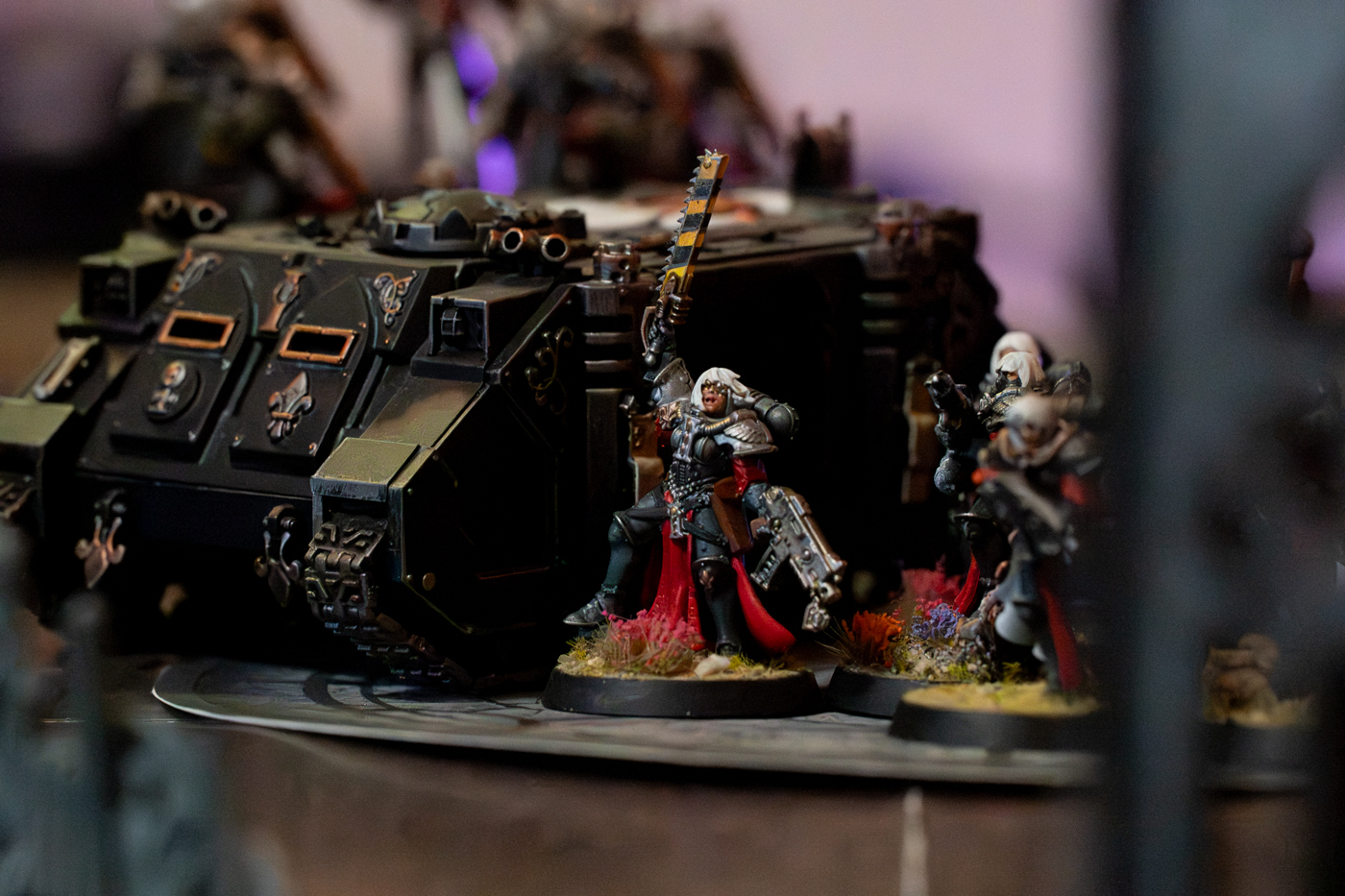
I was going to write a battle report, but the game boiled down to Morvenn Vahl and her Nundams killing a Knight turn 1, her being killed turn 2 and it all going downhill from there. Celestine was brave as ever and managed to last until the end of round 5, but the rest of my army didn’t do too well. Becky’s last stand was as cinematic as ever, as she took on a knight solo after losing the rest of her unit but I’d stopped playing to win by that point. I was playing purely for the lore.
Anyway, here’s some actual footage of my Sisters getting pummelled by three knights, two tanks and a squad of Terminators.
Let’s be controversial. Some advice for digital graphic designers
The worst piece of self-affirming advice I see and it’s been thrown around for the last 15 or so years. This really wasn’t the mindset, and it’s stunted a generation of web designers.
Graphic designers don’t need to know how to code.
It’s an idea that gets repeated, usually as reassurance. On the surface, it sounds liberating; especially if you’re a designer who has no interest in becoming a developer.
But it’s also one of the most limiting pieces of advice in modern web design.
If you design for the web and you don’t understand how the web is built, you’re designing in the dark. I’ll go as far as to suggest that you aren’t designing anything at all; you’re just making pictures.
Should I, as a graphic designer understand how to code?
Yes. Yes, you fucking should.
I’m not saying that you need to know how to build an accessible, lean WordPress theme from scratch, or that you should know how to plug a front end in to a custom CMS. You don’t need to know how to develop web apps in Laravel, React, or interpret complex database systems. In fact, I’d suggest you don’t even look at those things unless you find dev enjoyable (which I do, because it’s actually quite fun).
You don’t need to know APIs, SEO, GEO or any three word acronyms other than CSS.
But the absolute fact — and this is true of every single creative endeavour — is that the more you do know about the entire process, the better you will be as a designer.
This isn’t art. The end product, and it is a product, has to answer to the clients question: It needs to convert, raise awareness, increase sales, convince investors. Impact should be measurable. It also has to be accessible, scalable, on brand, on budget and, possible to build.
The more you know about the post design process, the further you can push your creative work.
What’s interesting is that all these disciplines start with HTML and CSS then quickly bleed in to each other. If you can build up the websites you design as static HTML and CSS front ends, you’ll quickly start to streamline your work. You’ll begin breaking sections in to reusable components because it’s efficient. You’ll build out a CSS framework with a solid starting point and foundation to save time. Your code will get leaner. You’ll quickly refine a library of modules and parts that complement your design style as you revisit your design process to see how far you can push them.
So break out notepad and start building some of your frontends. You’ll become a better designer because of it, developers will want to work with you and we will all live in harmony.